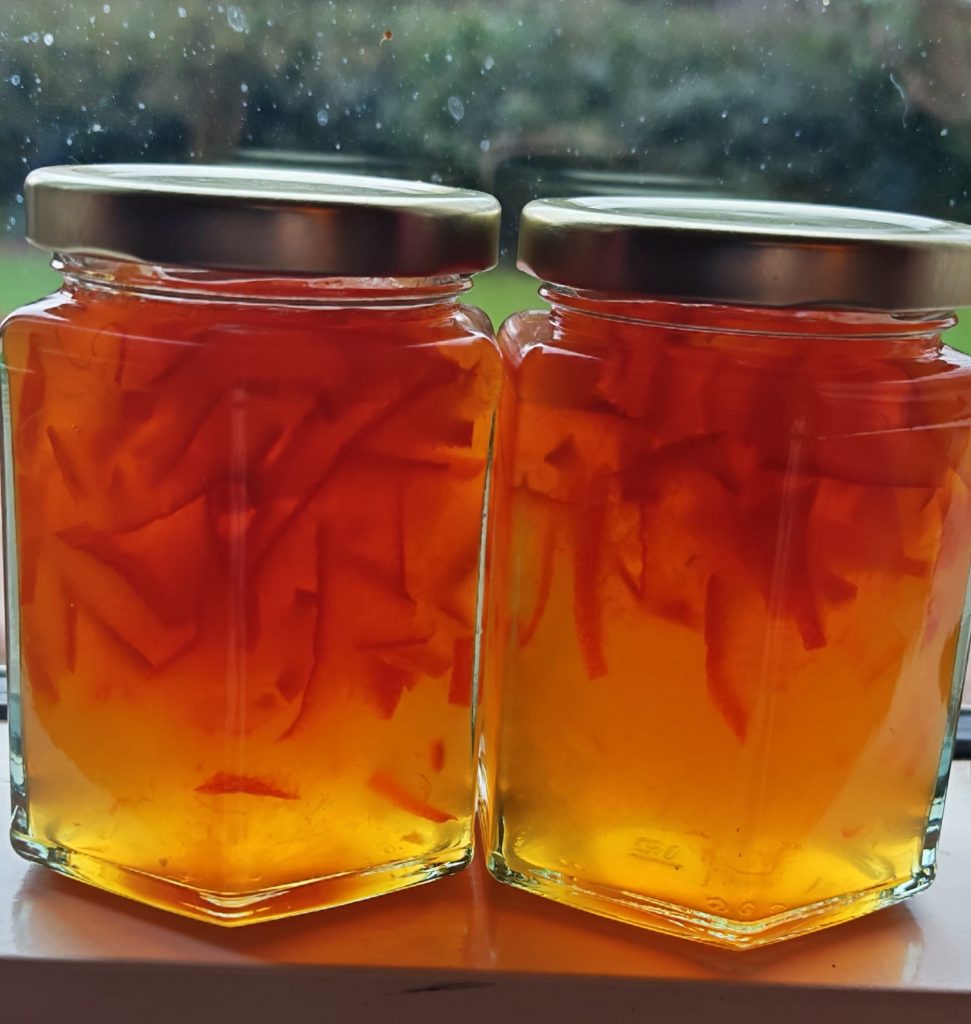
 It’s one of the most annoying aspects of making Marmalade, noticing shreds of peel have risen in the jars. If the jar is for a competition then marks will be lost for this common fault. This year I have seen more than the usual number of jars with risen peel, so time to examine the causes.
The shreds
If the shreds of peel are chunky and thick, they might not have been cooked sufficiently and will be tough. Before adding the sugar, test a piece of peel between your thumb and forefinger. Rub the peel and check it disintegrates. If it is tough, it has not been softened enough and when sugar is added it will toughen some more.
Quite often a recipe asks for the pith to be removed from the peel, resulting in risen peel. This is unnecessary as the pith of Seville oranges and Grapefruit, both popular citrus for Marmalade turn translucent when cooked. The pith is full of pectin which is necessary for a good set. During the gentle simmering of the fruit in juice and water, pectin is released into the pan from the peel, and the contents of the muslin bag ( inner membranes and pips). As a rule, I recommend thinly shredding peel for Marmalade. You will get the maximum amount of pectin cooked out into your pan.
Weak set
A reliable recipe with the correct balance of citrus fruit, pectin, acid and sugar should result in a gelled consistency that will suspend the peel evenly through the jar. Seville oranges are very high in pectin but need some extra acid in the form of lemon juice to balance their amount of pectin. Aim for a roomy thin cotton muslin bag with the chopped up remains of the lemon, the inner membranes of the citrus and the pips, When it’s simmered in the pan of ingredients it will soften and generate a stream of liquid pectin when squeezed back into the pan before the sugar is added.
Insufficient resting
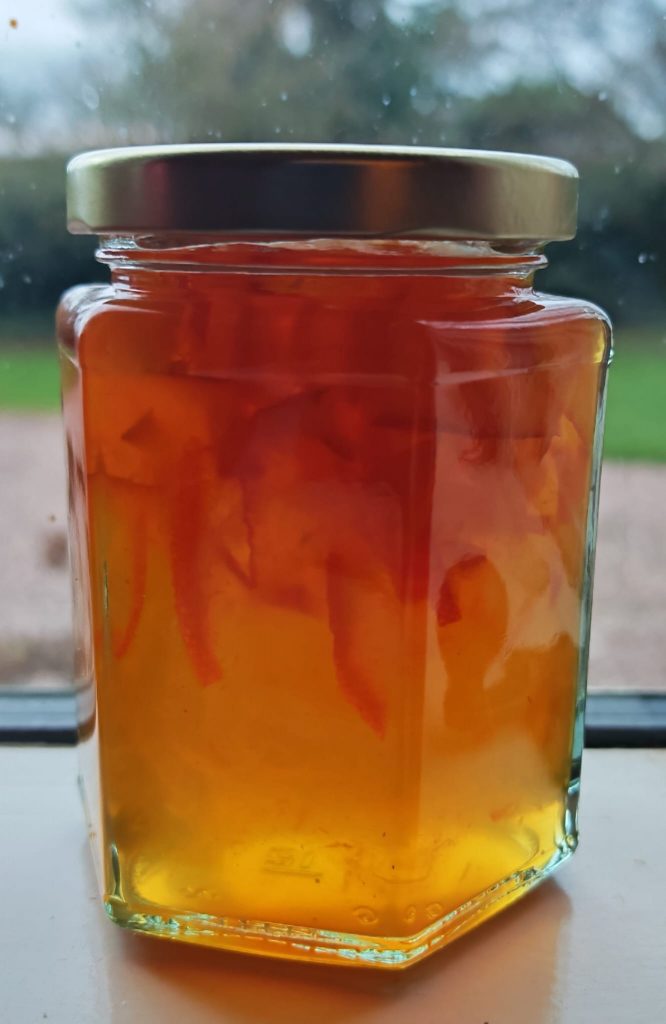 Once setting point is reached, the pan of Marmalade should be rested off the heat for 8-10 minutes. During that time, if you push the surface gently with the edge of a spoon, you should see a slight wrinkle and the surface should feel just firm when depressed gently with the back of a spoon. After 8-10 minutes, stir the marmalade gently to distribute the peel through the Marmalade. If you bypass the 8-10 minute resting time, the peel may well float in the jars.
Hot jars
Jars should be warm to the touch, not hot as this might cause the peel to rise.
Potting up
Fill one jar to the brim then check to see if the peel is rising. If it is, pour the Marmalade back into the pan and wait for 5 minutes. Alternatively half fill each jar then go round and fill the jars to the brim. This tip was given to me during my Women’s Institute Preservation Certificate training, a good one to pass on.
Upturning a jar with risen peel to try and redistribute the peel is not something I would recommend. Marmalade will be added to the underside of the lid and if the jars are left until cold, the jar will ‘set’ with an air vacuum at the bottom of the jar.